Close
Your shopping cart is empty


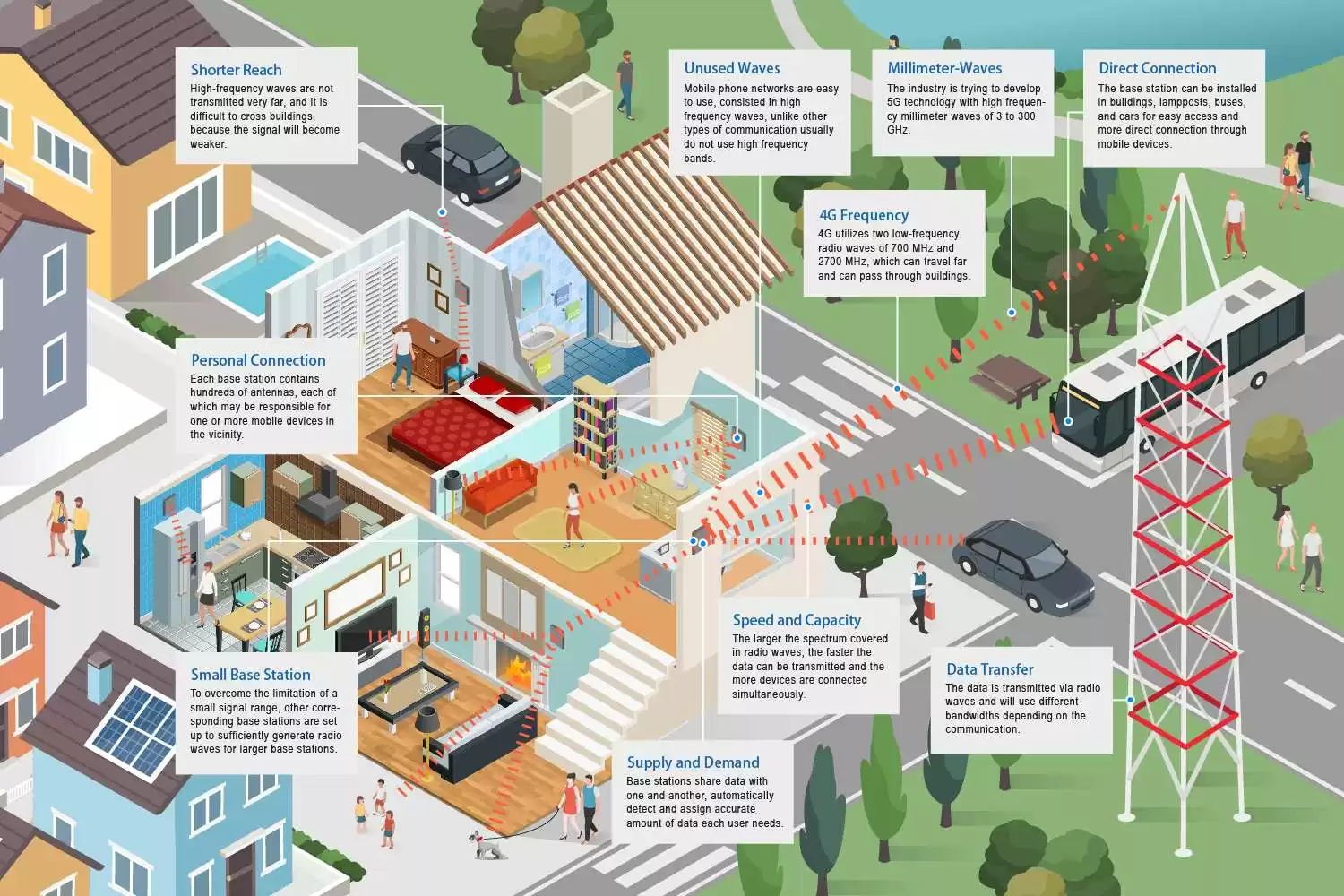
5G New Radio (NR) and LTE are different radio technologies. LTE is associated with 4G, while a 5G project must identify the NR bands supported by the equipment and the intended network. A general label such as “5G antenna” does not establish compatibility with every deployment.
The 3GPP specification published as ETSI TS 138 101-2, Release 18, defines FR1 as 410–7125 MHz, FR2-1 as 24250–52600 MHz and FR2-2 as 52600–71000 MHz. These are standards frequency ranges, rather than a statement that one antenna covers every frequency in them. The actual operating bands and supported configuration must be checked separately.
Frequency is one part of a radio system. The antenna, installation position, cable, equipment and surrounding environment also belong in the project review. Avoid selecting a product from a claimed network speed or generation name alone. Start with the radio module and operator requirements, then compare the exact antenna model specifications.
Small cells and larger base stations describe different deployment arrangements. The number of antenna elements or connected devices is a system design question, not a fixed value that applies to every base station.
When contacting EVERCOM, provide the target country or network, required frequency bands and the radio equipment to be connected. Identify whether the project needs a single RF connection or multiple antenna ports. Include the connector, cable type and length, installation method, enclosure space and expected environment.
Use the published specifications for the selected model to compare frequency coverage and the listed electrical and mechanical parameters. If a requirement is not stated on the product page, ask for confirmation before choosing a configuration. A product family name or a general technology illustration cannot replace the model documentation.
Before production, agree on the sample configuration and the checks needed for the final equipment. Record the installation position, cable routing and interfaces used during evaluation, so that results refer to a reproducible setup. Confirm applicable testing and approval requirements for the exact product and destination market.
Browse EVERCOM cellular antenna products and the 4G/5G MIMO integration guide, or send your project requirements.
Frequency reference: ETSI TS 138 101-2 V18.13.0, Table 5.1-1. The retained illustration is a legacy overview; use the specification and model documentation for engineering requirements.